

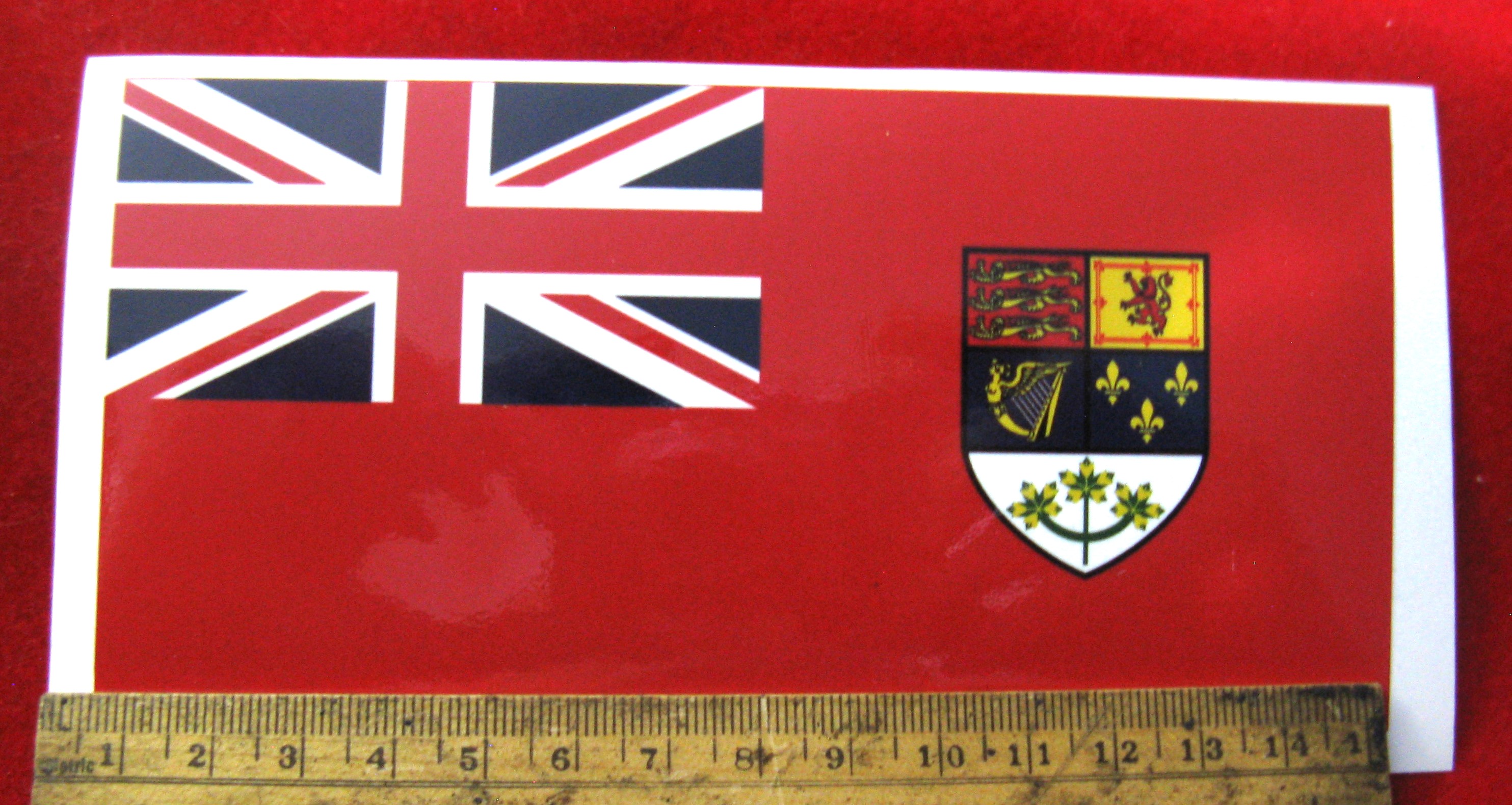
Commemorative Adhesive Car Decal (used on Canadian Military Vehicles in WWII & Korea )
#00003832

|
|
|
| Price: | $6.00 | |
| Shipping: | Canada: $4.00 | International: $4.00 |
| Insurance: | Canada/US: $30.00 | International: $12.00 |
| If insurance is declined the buyer takes all responsibility for damage or loss in shipping. | ||

|
S+H: $16.00 No GST Shipping to United States Change Country | |
6.You are viewing a Commemorative Car Decal (similar to those used on Canadian vehicles in WWII). An interesting rememberance of a bycone era for your vehicle. Has an adhesive backing. Great for window applications.
It is a modern replica in exact size and shape. Made in Canada of weather resistant material.
This was the flag design that hundreds of thousands of Canadians served under in WWII and in Korea.
On all our products we accept prepaid authorized returns within 14 days of shipping, for full product credit, if you are not pleased.
I will happily combine items to save shipping costs if you purchase other items as well...
-read on...
It is noteworthy that
in 1914, at the beginning of WWI, when King George V of England declared war on Germany, Canada, not yet a fully independent country, was therefore automatically at war. We were still a
colony, in essence, of Great Britain's empire, despite the BNA act..
However, the Canadian Army, under Sir Arthur Currie, proved itself so well during that war, and especially at Vimy Ridge in 1917 that the eyes of the world were turned toward this little country across the sea.. Our little army of farmers, cowboys, and store clerks broke through the powerful Imperial German lines and forged a salient nearly 30 miles deep into German territory, (by the way, that was never accomplished by either the Brits nor the mighty French army. Only we Canadian "bow-hunks" were able to do it)
As perhaps a direct result of this decisive victory, when the war ended, Canada had become a full-fledged and respected member of the world community of nations, and consequently signed the Armistice, (called the treaty of Versailles) in 1919, as an independent country, apart from Great Britain... Now a completely independent entity on the world stage, "The Dominion of Canada" as we were known then, became a founding member of the League of Nations. Canada was also a founding member of the British Commonwealth of Nations. Now recognized by the world as an independent country, and flying the "Red Ensign" as shown above, Canada entered WW2 by declaring war on the Nazis, a few days after King George VI of England, made his declaration. Our only link with England then were our traditions, way of life, our love for the Motherland, our proud historic roots, and the British North America Act (which is the Canadian Constitution passed in the British Parliament in 1867) .
The Canadian Constitution, originally established by the British Parliament, where it was safeguarded against amendment, was brought under Canadian legislative authority in 1982 during the government of Prime Minister Pierre Trudeau. This process, historically referred to as "repatriation," involved transferring constitutional authority, for any amendments or changes, from Britain to Canada, despite debate over the terminology since the constitutionrn itself originated, in England, as a British law. As a result of this relocation, subsequent modifications to the constitution, that were made, became possible through decisions made by the leader of the majority government, eventually leading to the enactment of the Canadian Charter of Rights and Freedoms. While the Charter expanded the catalogue of certain rights afforded to Canadian citizens, some have argued that it altered traditional notions of freedom within the country.
Currently, many legal interpretations regarding rights and freedoms are shaped through judicial processes and advocacy groups, rather than solely by elected representatives or citizen juries. In 1987, Alberta Premier Lawheed sucseeded in placing the "Not withstanding Clause" into the charter which has somewhat stalled the reformer judges, and their friends plans to re-arange the Bill of Rights.
There was also an incident in which an individual poured red ink on the original Charter while it wa on display in Ottawa, though the motivations behind this act remain open to interpretation.
"Oh Canada!" where have you gone, don't you care about your sons and daughters?"
.
Subscribe to Our Newsletter
Latest Items
 CEF WWI 114th Cap badge - $89.00
Check it Out
 Hull Quebec Police insignia - $10.00
 WWII era RCAF Enameled Sweetheart Maple Leaf - $79.00
an exquisitly enameled "Sweetheart"
Check it Out
 CIX (109th) Canadian Militia Sweetheart Pin (pre WW1) - $129.00
gold filled sterling silver sweetheart badge
Check it Out
 F.A.N.Y. - $79.00
Check it Out
 Mounted Police Early Shoulder Flash (English only version) Lot#2 - $29.00
 1990's Current Pattern Shoulder Flash (set of 2) - $18.00
 1870's Wurttemburg, Germany Fireman's Helmet plate. - $189.00
Note that the crest is identical to the one found on modern Porche cars
Check it Out
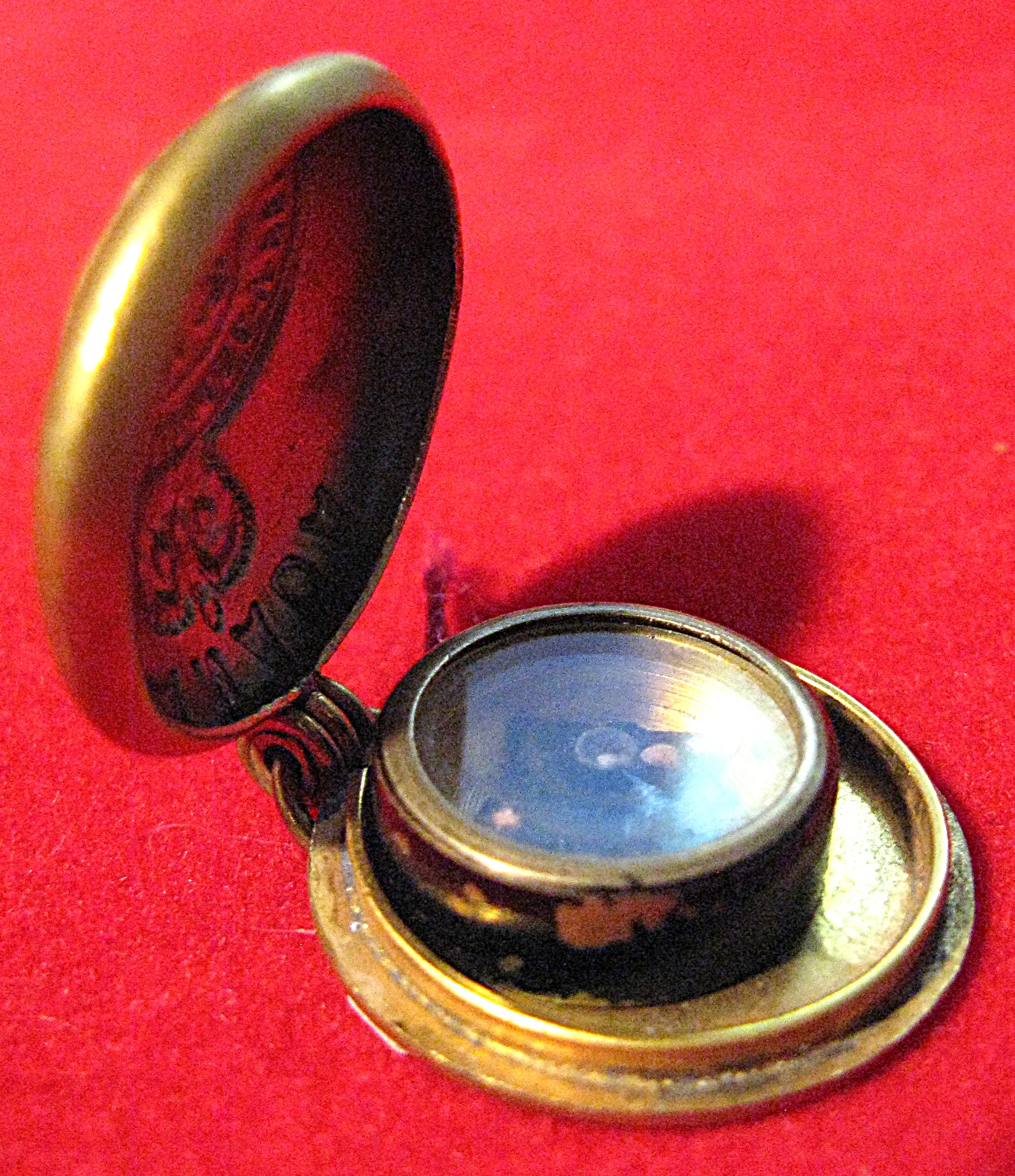 WWI Canadian Army Button Stash for mini compass - $389.00
Check it Out
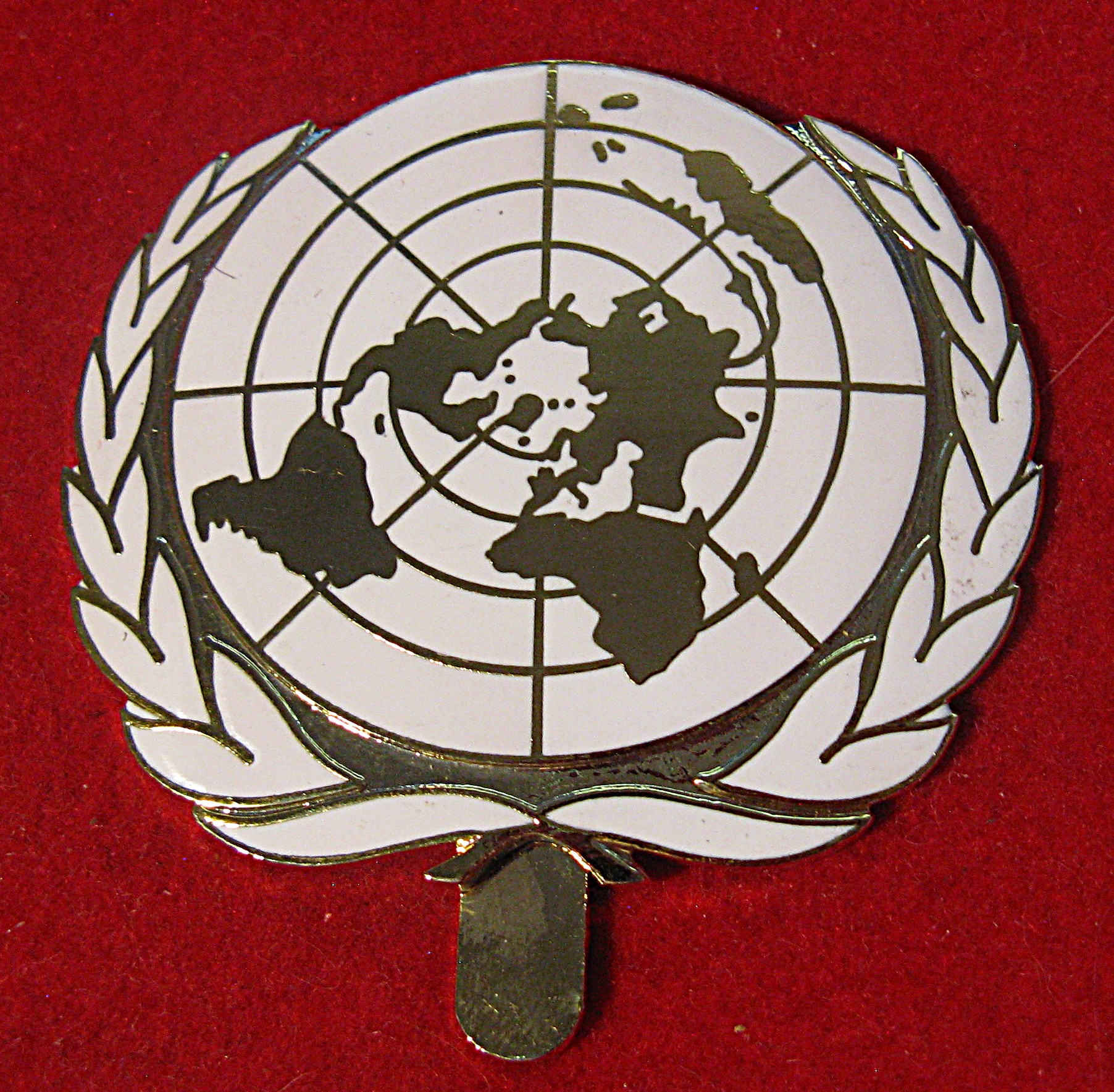 UN Cap Badge (lot#4) - $29.00